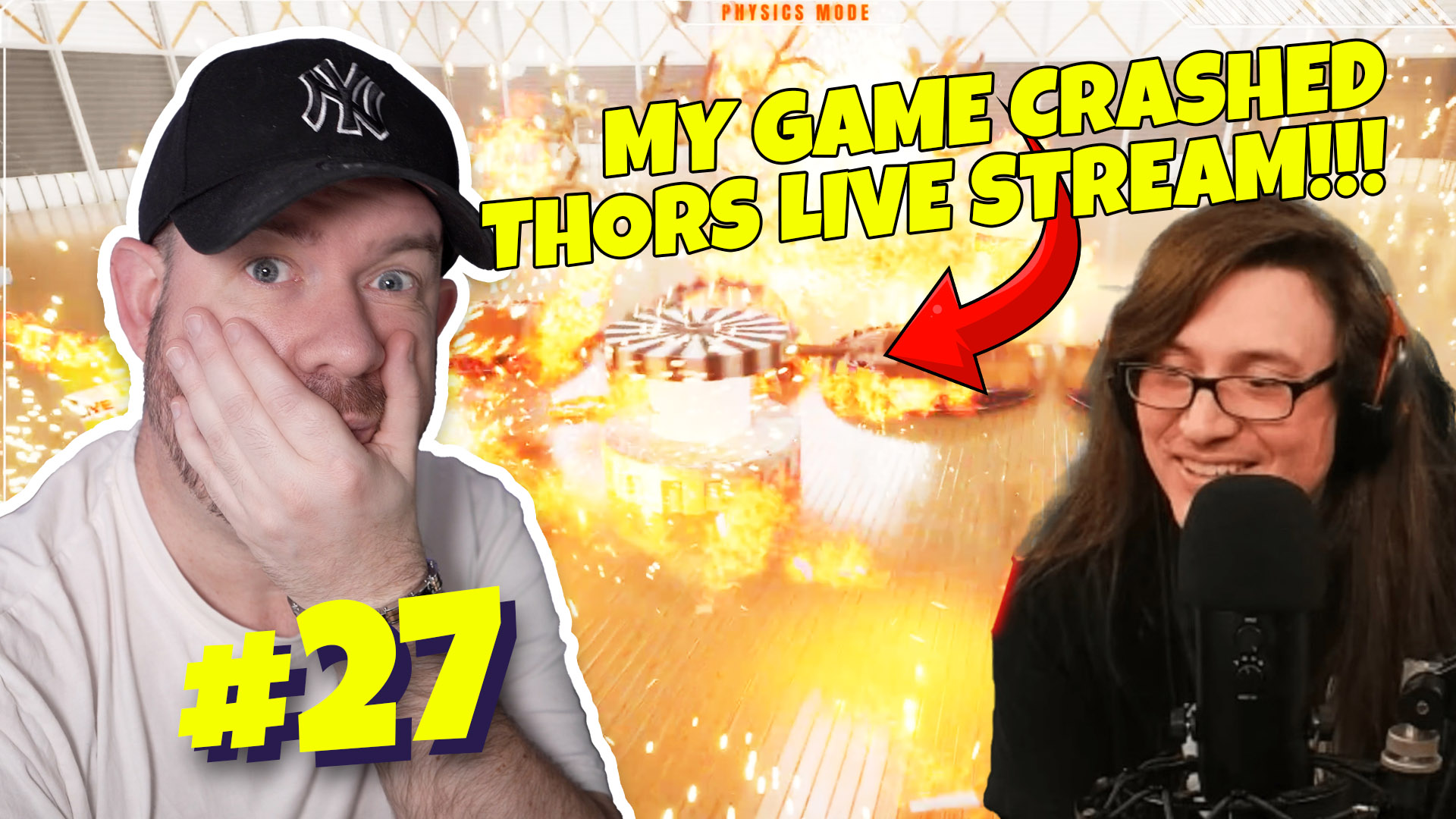
Devlog Episode 27 covers one of the more public ways a development build can misbehave. RMF’s Ragdoll Physics Experiments appeared during Pirate Software’s Indiecember stream and managed to crash badly enough for the incident to become the headline of the next devlog.
The main development work in Episode 27
The game was featured during Pirate Software’s Indiecember stream. During that appearance, the build crashed badly enough to interrupt the live demonstration, turning a promotional opportunity into a very public debugging story.
That is embarrassing in the moment, but it is also an unusually honest snapshot of indie development. A build can work repeatedly in private and still find a new way to fail when somebody else runs it live in front of an audience.
Looking back at Episode 27
The value of the episode is not that crashing is good, obviously. It is that a live failure creates a very clear test case and a story that people remember. For a physics-heavy Unreal project, public testing can expose conditions that are difficult to reproduce in a controlled development session.
The indexed description verifies the Indiecember appearance and the crash. It does not provide enough detail to state the technical cause, so this retrospective does not attribute the failure to memory, physics, rendering or any other subsystem.
What changed in this devlog?
The game reached Pirate Software’s Indiecember stream and also produced a memorable live crash.
- Indiecember feature on Pirate Software's stream
- the game crashing during the live stream
Watch Devlog Episode 27
Watch the full episode to see the development work and the inevitable ragdoll consequences in context.
Watch RPE Devlog Episode 27 on YouTube
Follow RMF’s Ragdoll Physics Experiments
If you would like to follow the game’s development, visit the RMF’s Ragdoll Physics Experiments Kickstarter page and select Notify me on launch.