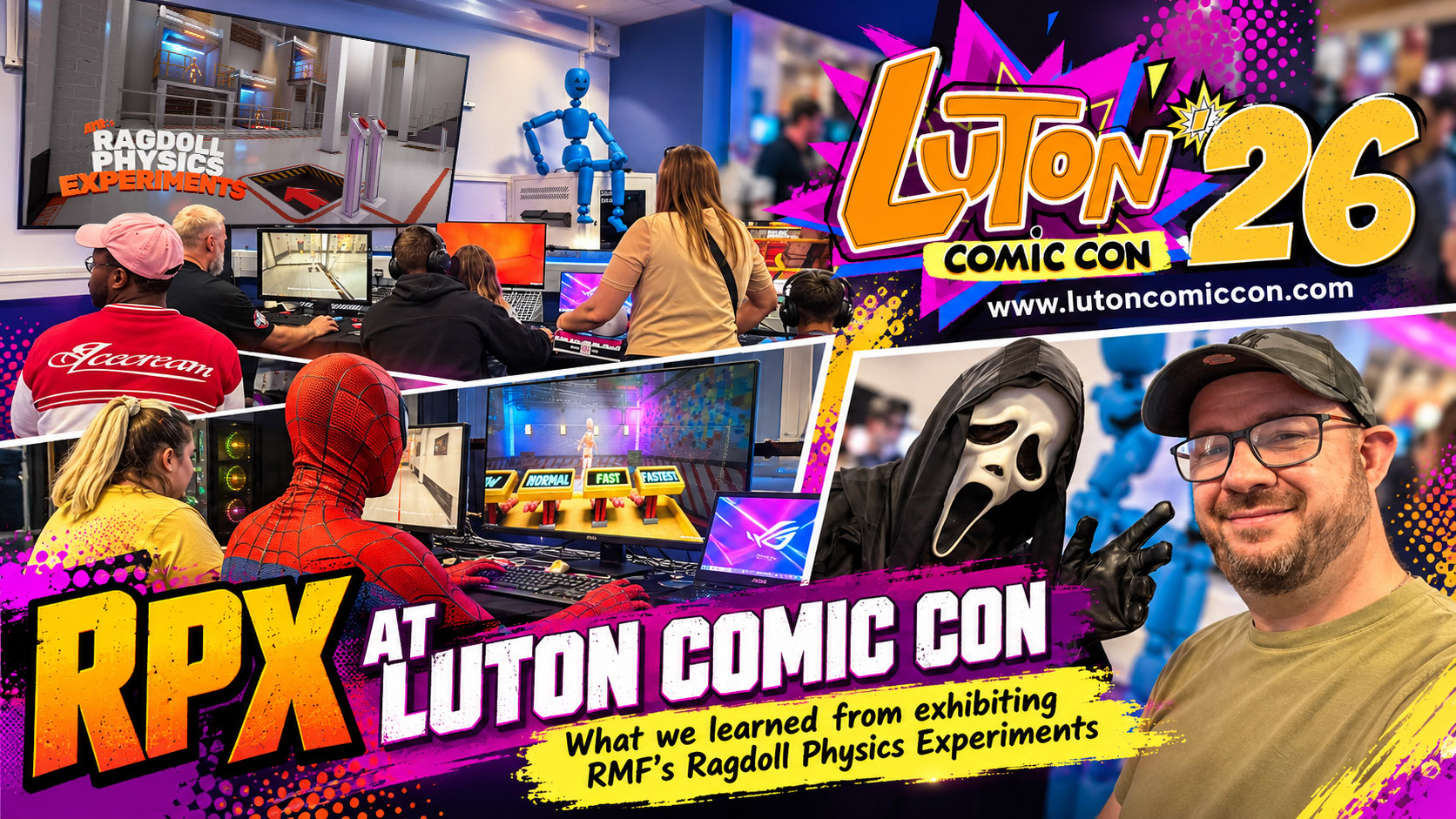
Every time we take the game to an event, we come away with something new to improve. Luton Comic Con was no exception.
Last weekend we took RMF’s Ragdoll Physics Experiments (RPX) to Luton Comic Con 2026 for two days of public playtesting on 26–27 September. By this point we’ve taken the game to quite a few events, and one of the things we’ve learned is that every show teaches us something slightly different.
Sometimes it’s something about the game. Sometimes it’s about how people play it. And sometimes it’s something as simple as realising that the way you’ve set up your stand could be much better next time. Luton gave us plenty of all three.
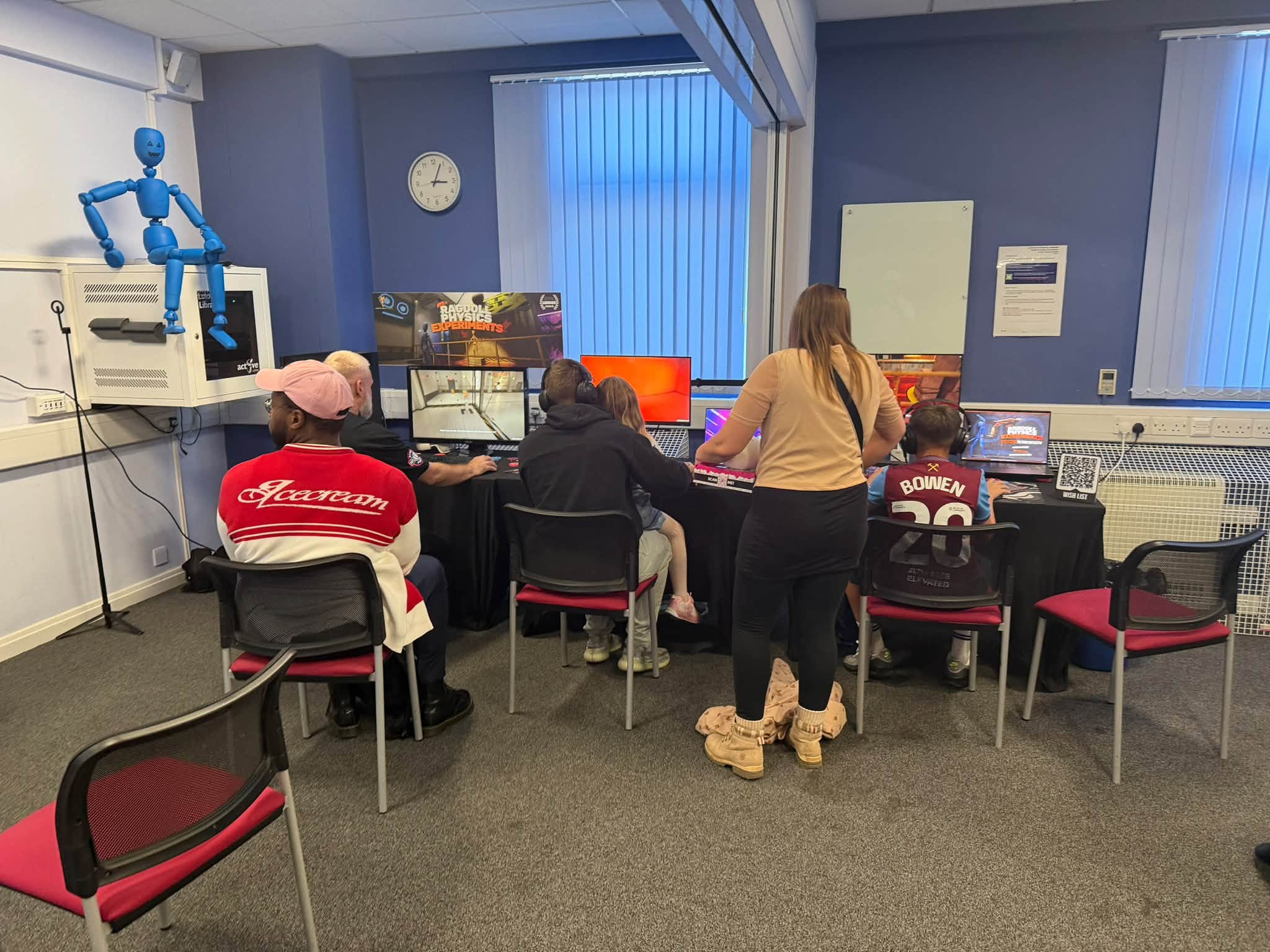
Three playable stations, less waiting
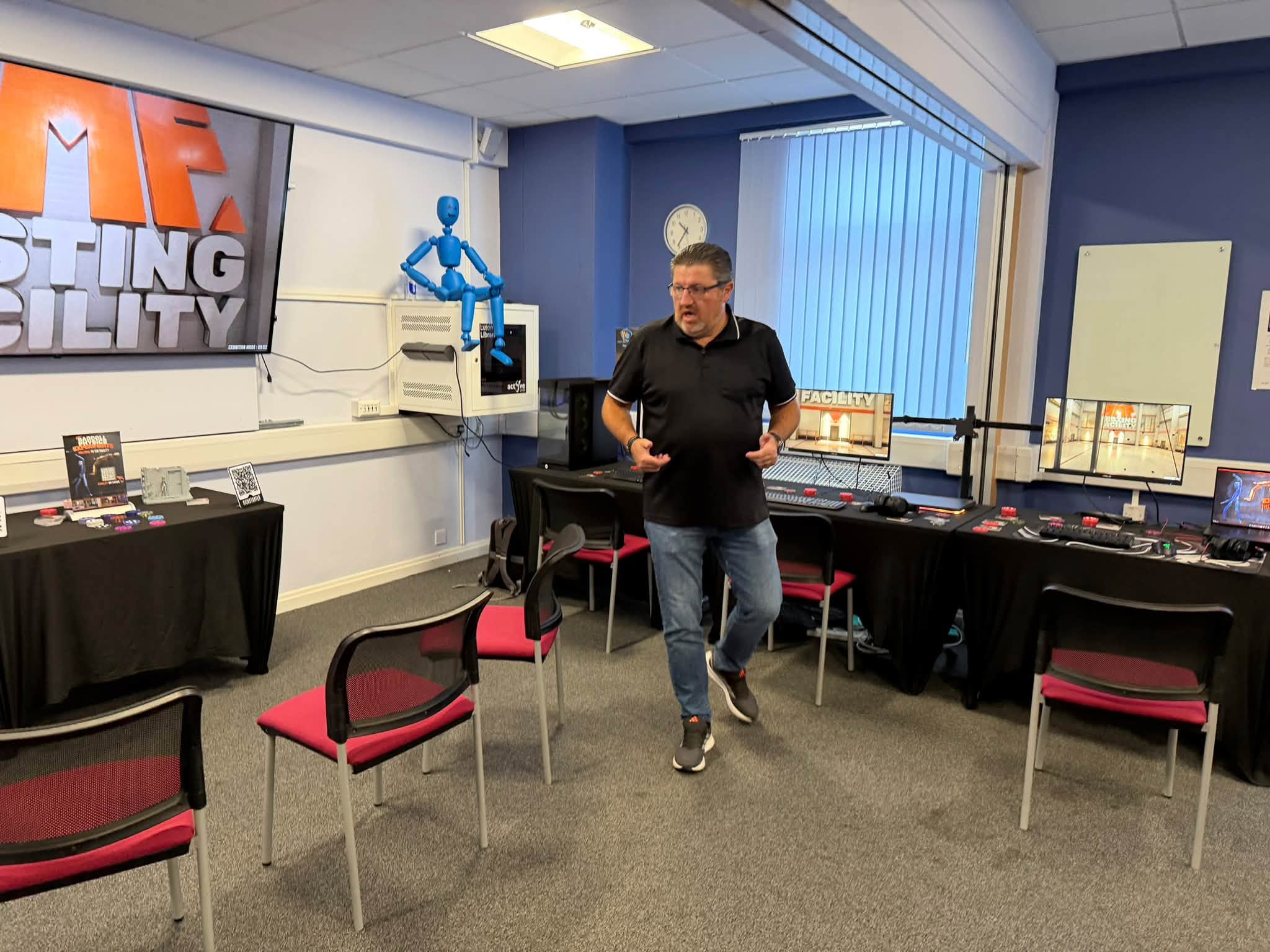
This was the first time we’d taken three full playable setups to an event.
Beforehand, I was slightly worried we’d made life considerably harder for ourselves. Three PCs means three screens, three sets of peripherals, three potential problems and three games running at once. In reality, it had almost the opposite effect.
At previous shows, with one machine, you often have one person playing while several others are standing around waiting. That means you’re trying to talk to the current player, keep the people waiting engaged, answer questions and keep everything moving at the same time.
With three stations, far more people could simply sit down and play. There was much less waiting around, people naturally moved between the stations, and we were able to spend more time watching how people actually interacted with the game.
So despite bringing considerably more equipment, the whole thing actually felt easier to run. That’s definitely something we’ll be keeping for future shows.
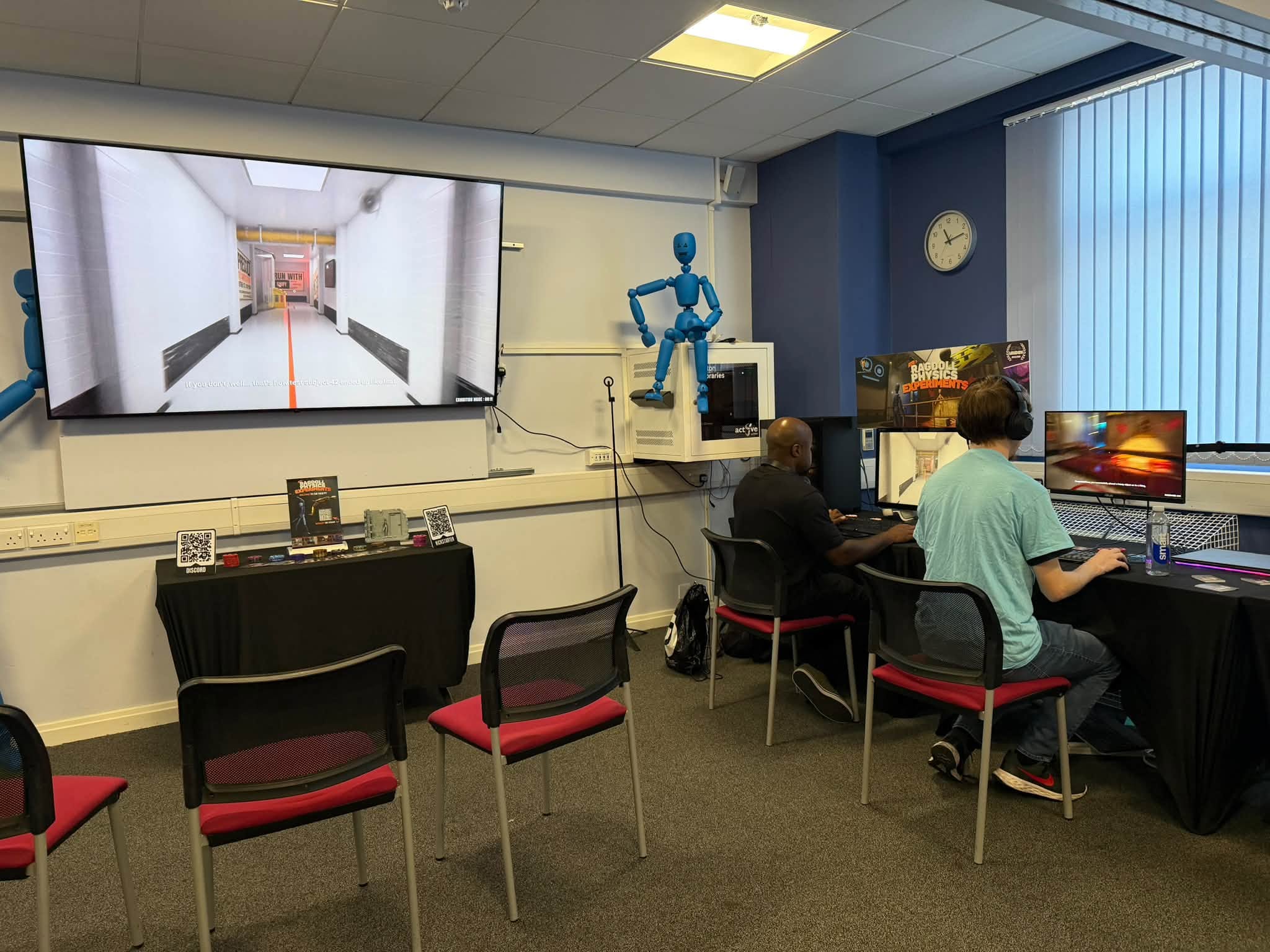
Building a better event stand
Something else we’ve noticed after doing several events is that the stand is never really finished. We arrive at a show, set everything up, look at it and almost immediately think of something we want to change for the next one.
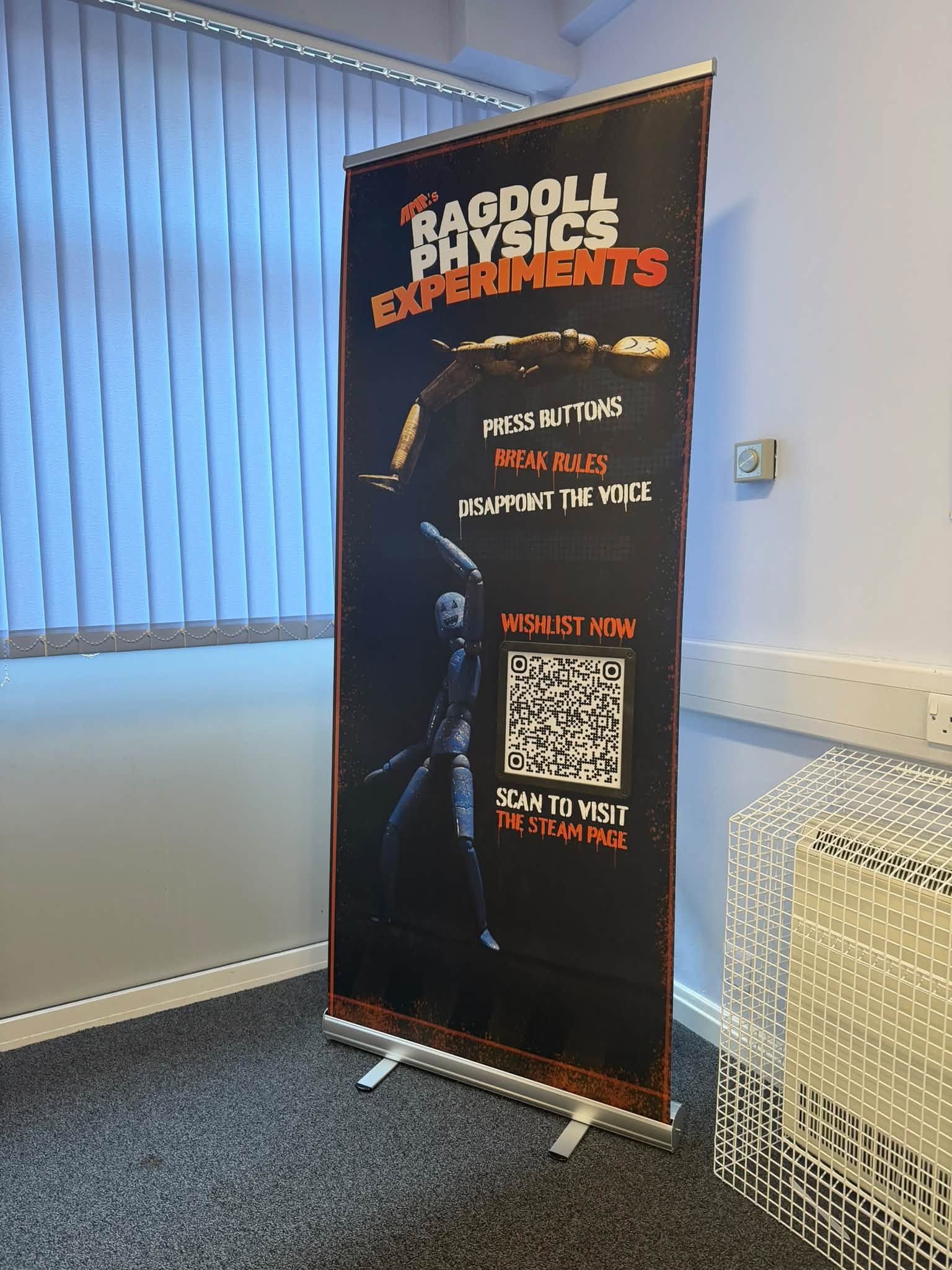
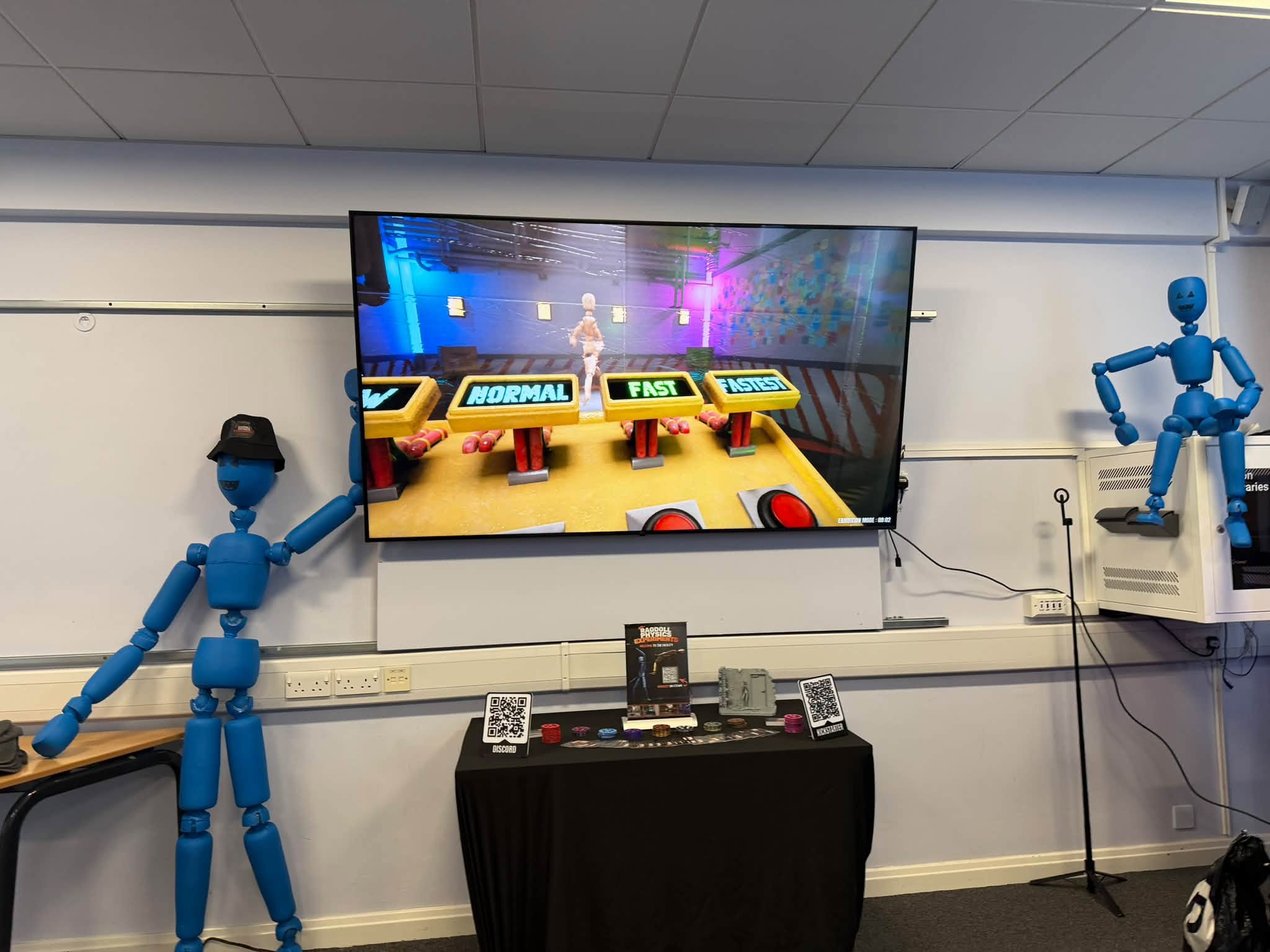
Over time we’ve added banners, QR codes, printed cards, Bluee models, giveaways and larger screens. None of those things individually transforms a stand, but together they make the space feel much more intentional.
One of the big lessons has simply been to make the most of whatever environment you’re given. You can’t always control the room, the lighting, the tables or where your stand happens to be positioned, but you can control what you bring with you and how you present it.
Every event gives us another idea. Then, inevitably, we go home and add that to the growing list of things to bring next time.
What public playtesting teaches us
The biggest reason we keep doing these shows is still the simplest one. You can learn an enormous amount just by watching somebody play your game.
Not telling them what to do. Not explaining what you intended. Just watching.
You notice where people hesitate, what they immediately understand, which objects they become curious about and which instructions they completely ignore. That is particularly important for RMF’s Ragdoll Physics Experiments, because the game is built around curiosity, experimentation and occasionally doing exactly what the Voice has just told you not to do.
We’ve changed parts of the demo several times based on what we’ve seen at events. And with every show, we’re building up a much clearer picture of how completely new players approach the game. That sort of feedback is difficult to replicate internally.
Why players mention Portal and The Stanley Parable
One bit of feedback we heard several times over the weekend was some variation of:
“I’m getting Portal vibes.”
“This reminds me of The Stanley Parable.”
Usually followed shortly afterwards by: “I love those games.”
That’s particularly encouraging because those are exactly the kinds of games we reference when trying to explain what RPX is.
We’re not trying to recreate either of them, but the mix of environmental puzzles, experimentation, comedy and an increasingly questionable facility clearly gives people a familiar reference point. And the fact that players are making that connection themselves is a good sign that the tone of the game is coming across.
Recording The Brilliant Humans Podcast
The weekend wasn’t entirely spent watching people throw ragdolls into things. I also recorded an episode of The Brilliant Humans Podcast, hosted by Jonathan Griffiths.
The podcast has a slightly different format from a typical interview. Rather than simply talking about yourself, guests talk about a person who has had a significant impact on them or shaped the way they think.
It made for a very different conversation from the usual game-development interview and was genuinely interesting to take part in. The episode was recorded as part of the Luton Comic Con weekend and should be appearing on the Brilliant Humans channels soon.
Talking game development with the Mayor
One of the more unexpected moments of the weekend was getting the chance to speak with the Mayor.
We had a really positive conversation about the value of bringing game development into local events like Comic Con, not just as entertainment, but as something people can actually see, play and ask questions about. For us, that is one of the nicest parts of doing events like this.
A lot of people play games, but comparatively few get to stand next to someone making one, try an unfinished build, ask how it works, or even just realise that creating games is something people are doing here in the UK as an actual career and business.
Being able to bring that side of development into a local community event was genuinely great, and it was encouraging to hear that recognised.
Helping players remember RPX
We also brought along a lot more physical bits and pieces this time. Business cards, hats, fidget spinners and the usual assortment of things that have slowly accumulated around the game.
The fidget spinners in particular disappeared quickly. We gave away roughly 120 over the weekend, along with four hats and a fairly heroic number of business cards.
The useful lesson here isn’t really “give away free stuff”. It’s that anything you can do to help somebody remember the game after they’ve walked away is valuable.
A ten-minute play session is great, but people will see a lot of things during a Comic Con weekend. Having the game’s name, artwork or Steam page physically leave with them gives you another chance of being remembered once the event is over.
Around 200 players and clearer feedback
Across the two days, we estimate that around 200 individual players sat down with RPX. That’s a lot of fresh eyes on the game.
And because we now have several events behind us, the feedback becomes even more useful. We’re no longer reacting to a single person struggling with something or one person loving a particular gag. We’re starting to see patterns.
If the same moment works repeatedly at different events, that’s useful. If the same piece of information gets missed repeatedly, that’s useful too. Each show gives us another batch of real-world evidence we can take back into development.
Ghostface, Spider-Man and a few unexpected visitors
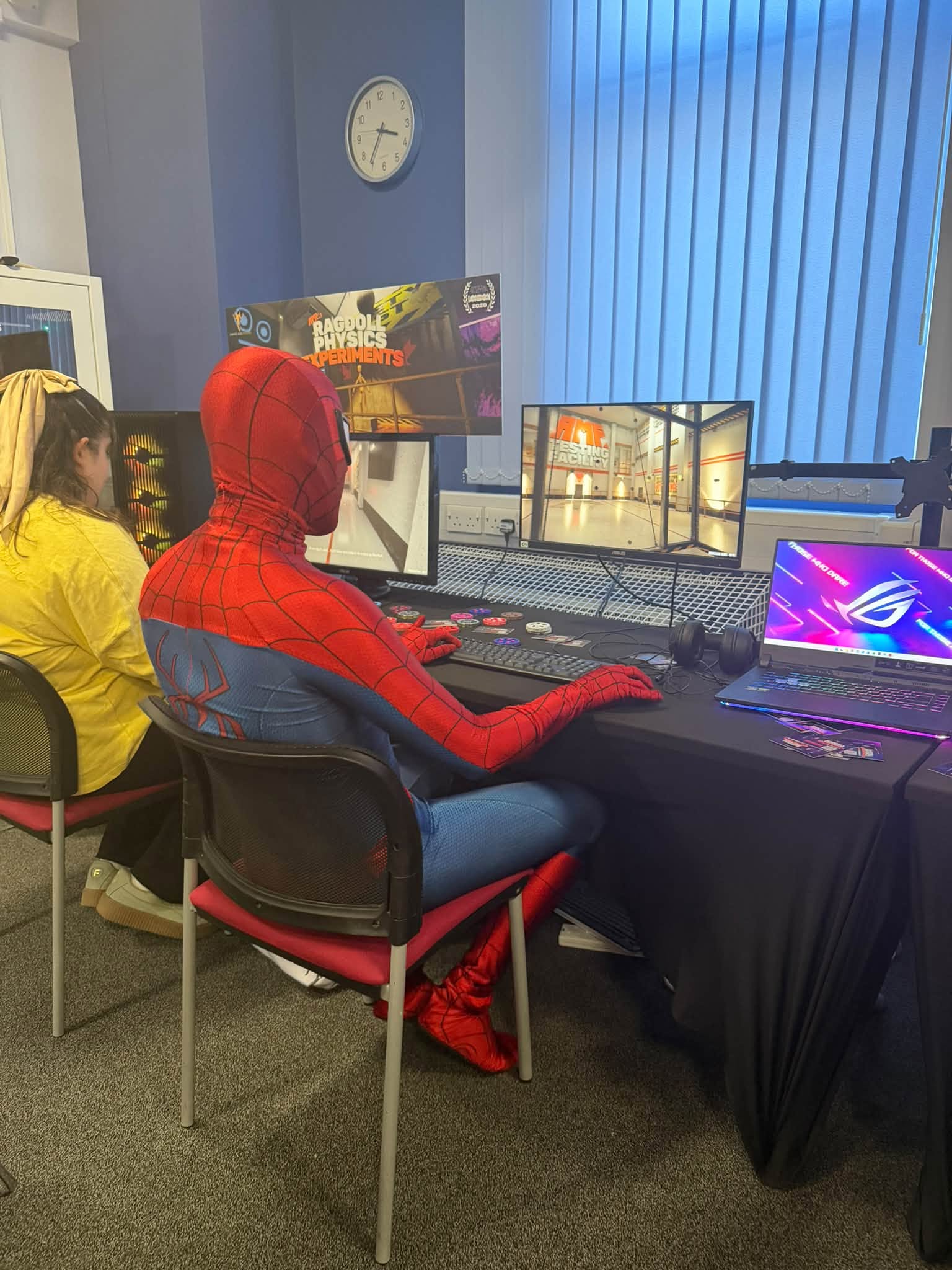
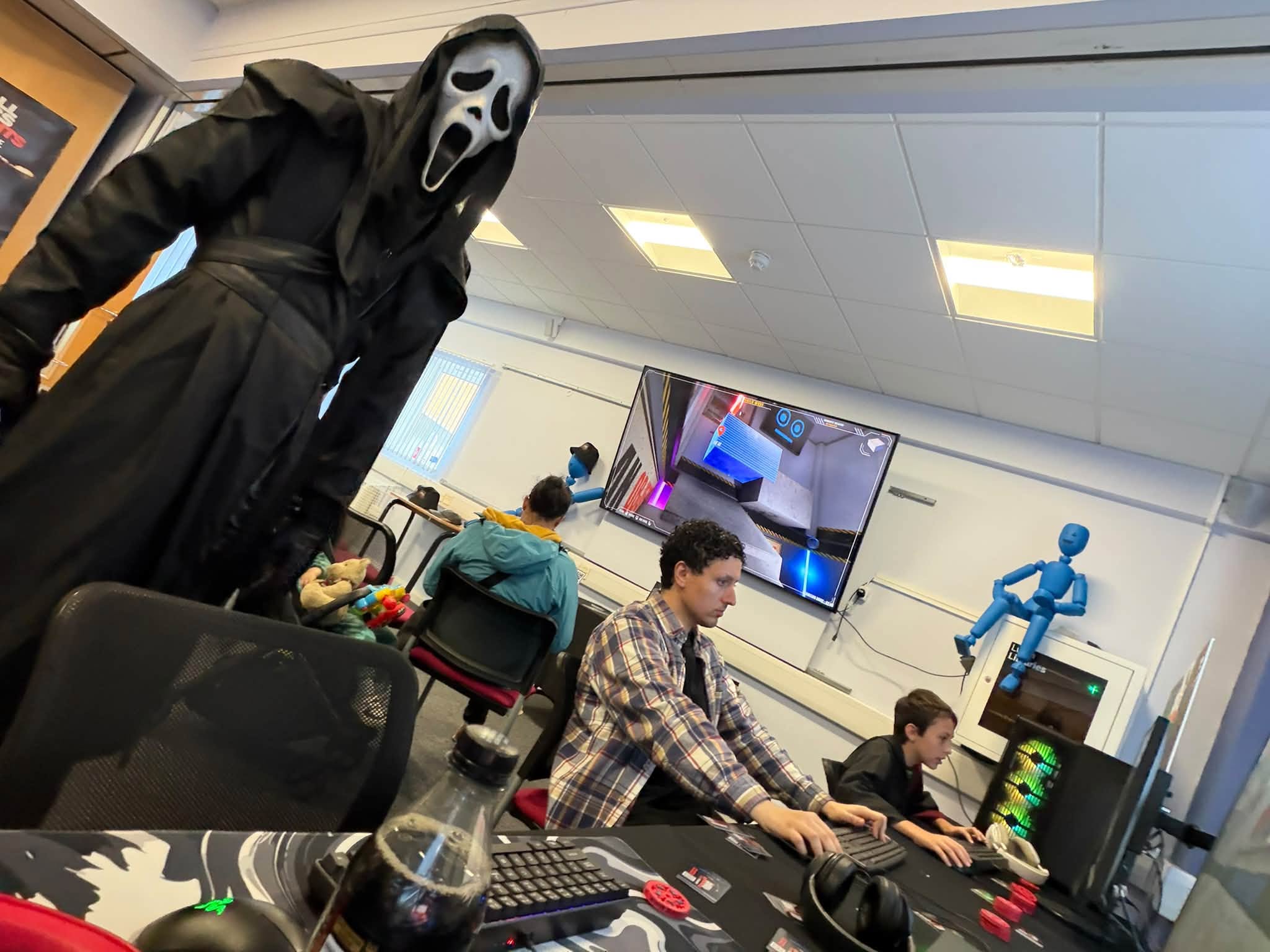
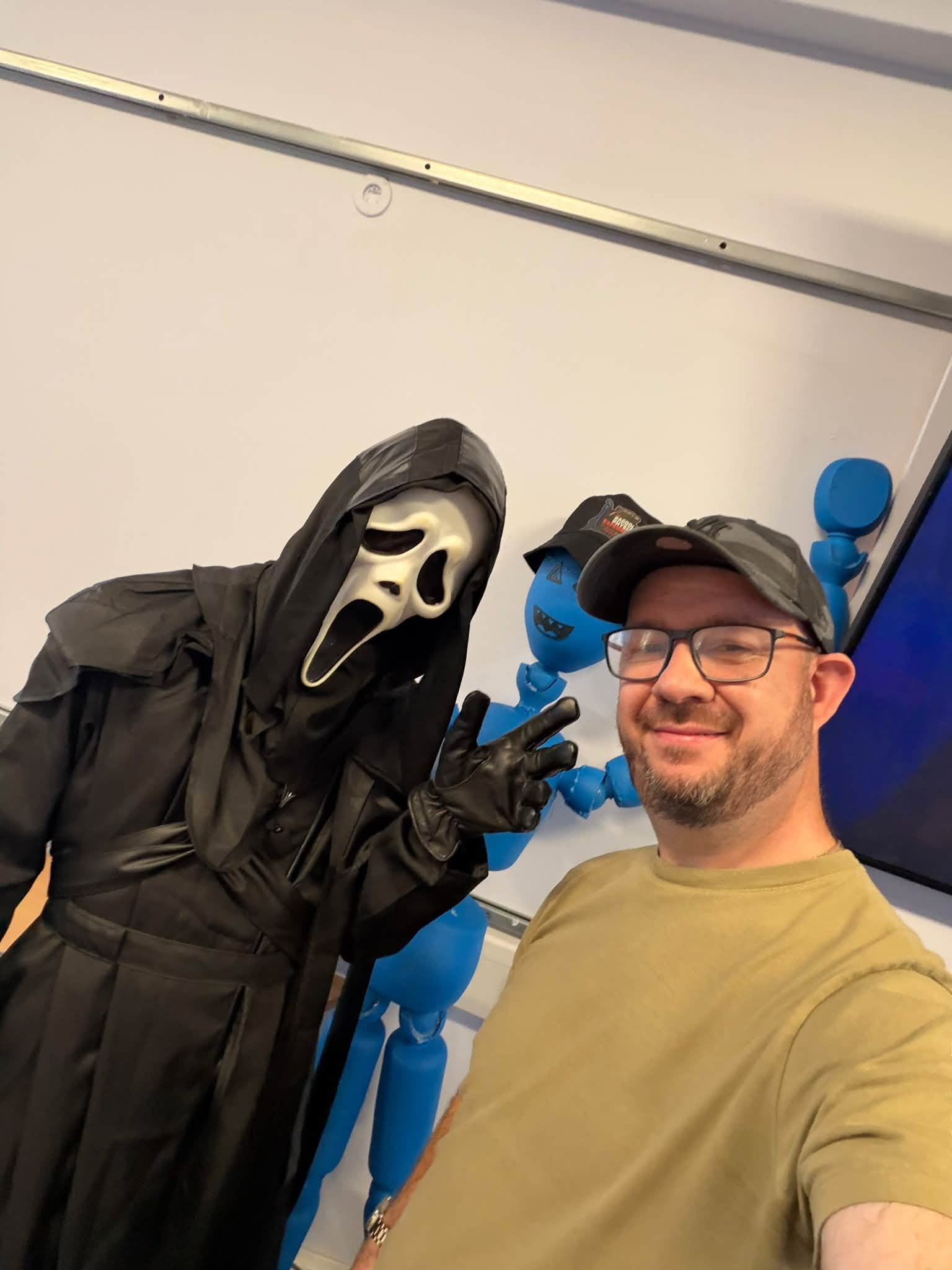
Not every lesson needs to be particularly profound. Sometimes Ghostface walks into your stand. Sometimes Spider-Man starts playing your game. And sometimes you end up with photographs that require absolutely no additional explanation.
Next stop: Swansea Video Games Expo
The biggest takeaway from Luton wasn’t one dramatic change. It was lots of small ones.
- We’ll keep improving the way the stand looks.
- We’ll keep finding better ways of letting people discover the game without us standing over their shoulder explaining it.
- And we’ll keep using these events as an opportunity to watch real players and feed what we learn directly back into development.
The next stop is the Swansea Video Games Expo on 29 November 2026, sponsored by Debug.
And, based on how this usually goes, we’ll probably arrive with several new things we hadn’t even considered bringing before Luton. That’s becoming part of the process.
More from the studio: Read how RMF’s Ragdoll Physics Experiments was selected for UK Games Fund support, or explore our games.